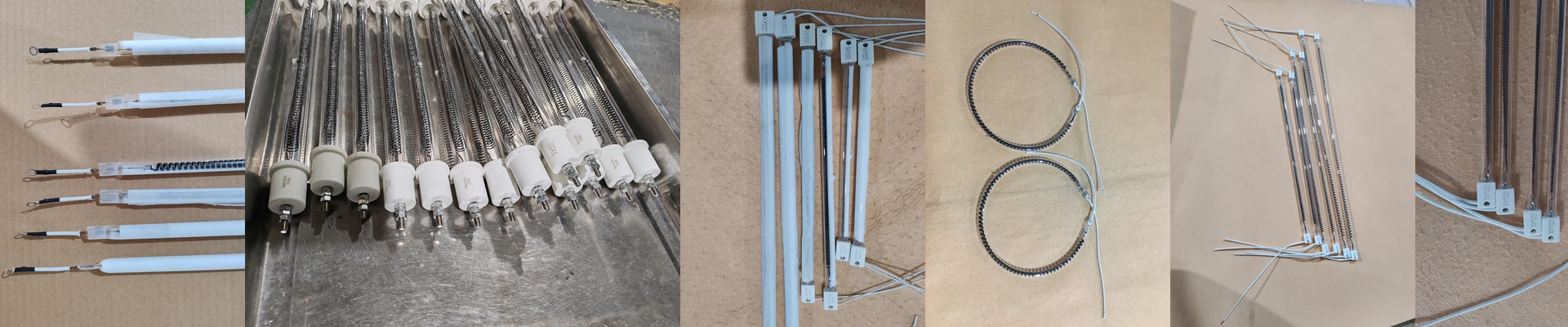
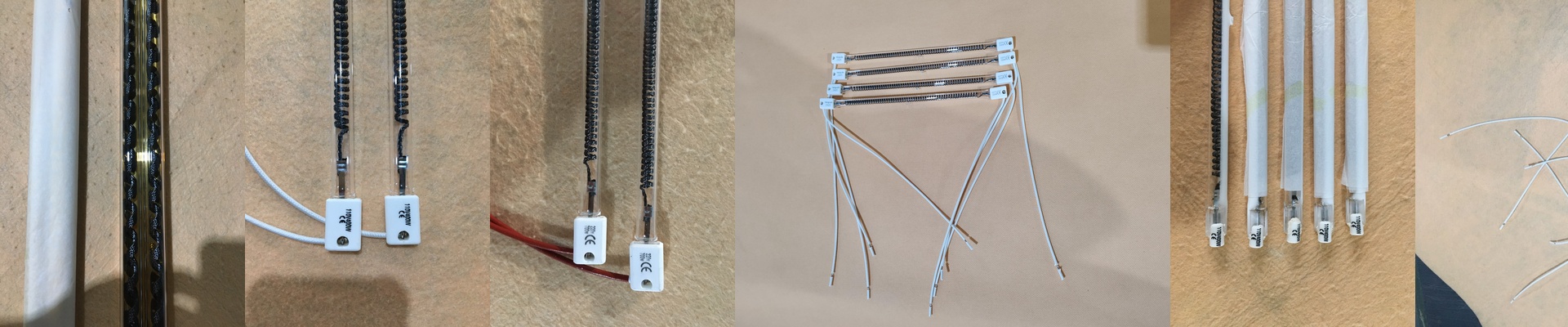
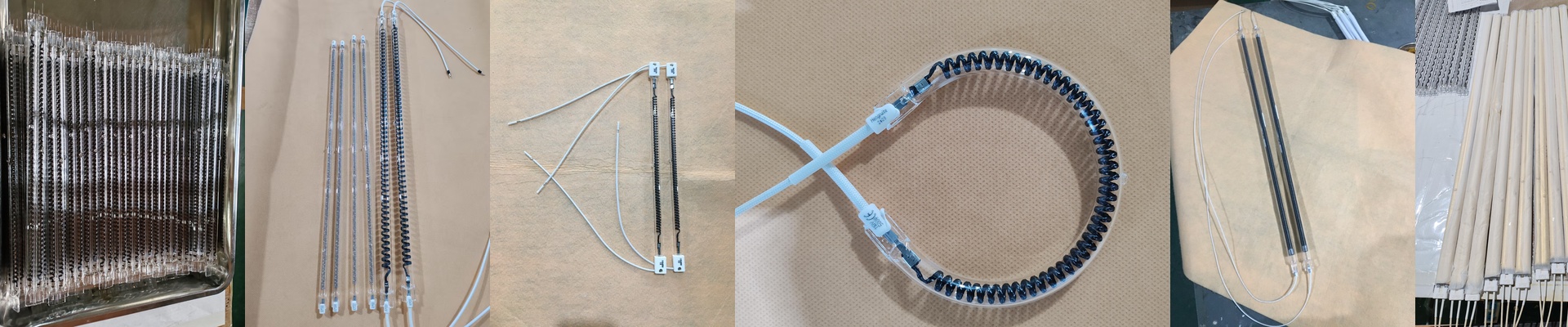
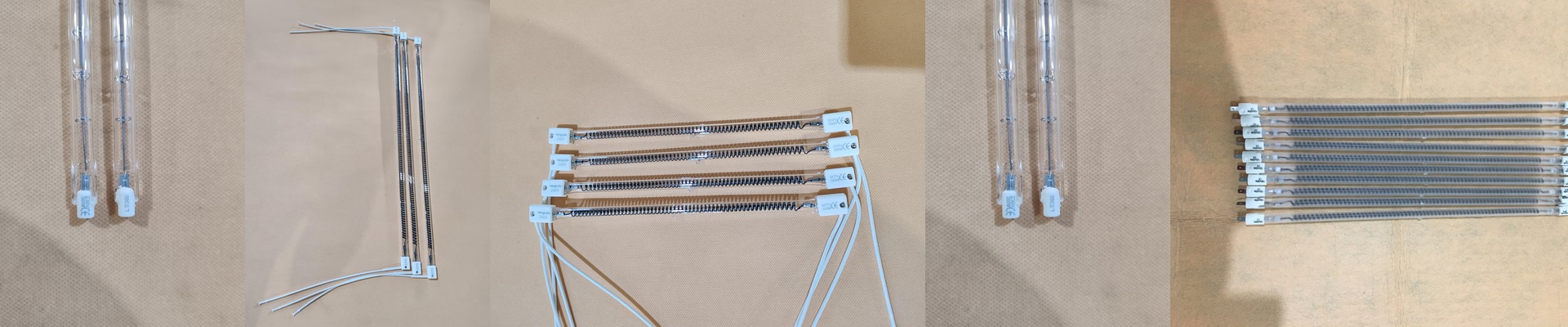
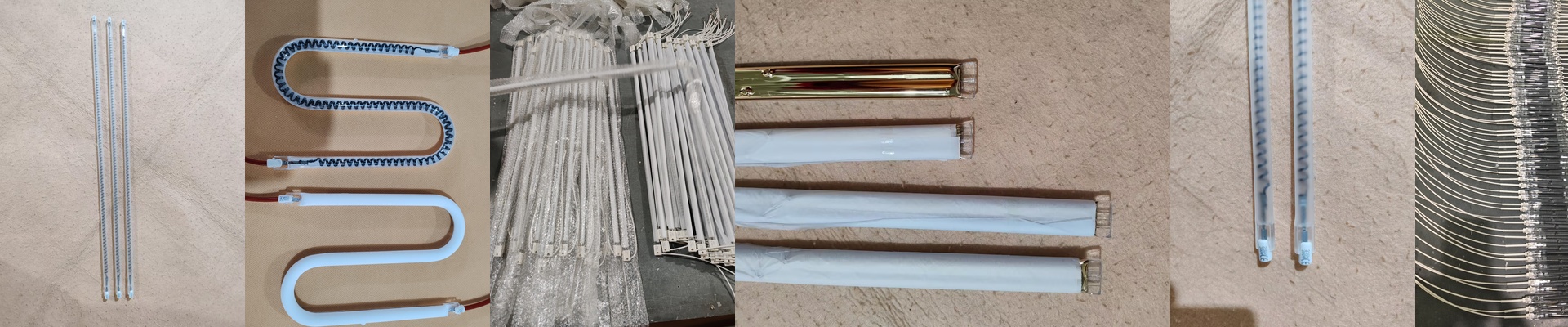
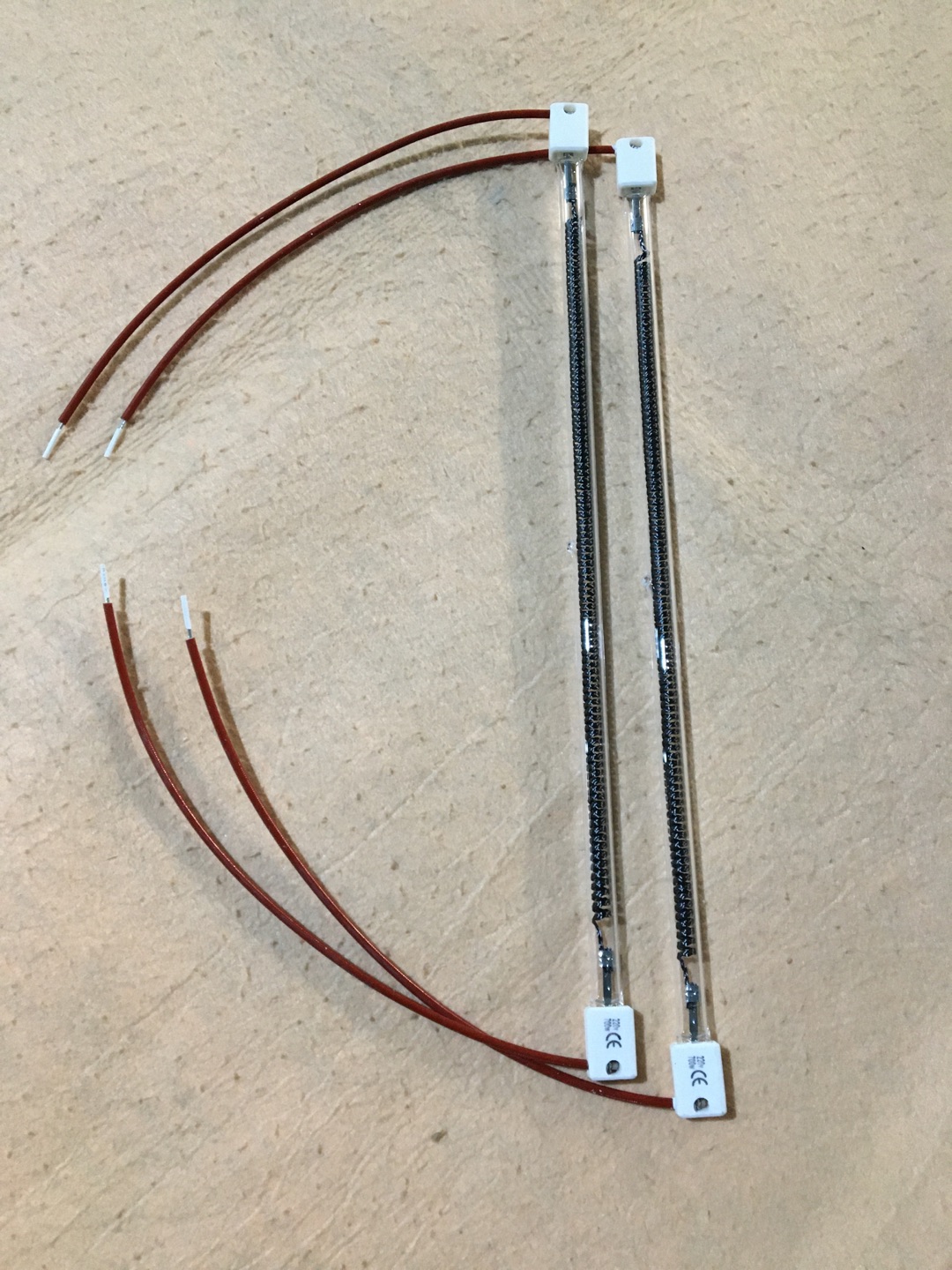
We built these carbon fiber infrared heat lamps for one reason: to give ovens fast, controllable heat—without the bulk of a full convection setup. Inside, you’ve got a carbon fiber element tucked into a quartz envelope. The result? Shortwave infrared that punches into materials quickly, so you’re not waiting around for the heat to arrive.
Power, voltage, and size: built for tight spaces
These lamps run high voltage—often 400V—because that’s how you pack serious power into a short tube. A typical setup is a 300mm tube delivering around 2500W. That high-voltage approach keeps the current lower, which means you can use smaller wiring and avoid big voltage drops over longer runs. And the short length? That’s the part you’ll feel every day. It gives you a tiny footprint, so the heat goes exactly where you need it—especially in cramped oven chambers and focused heating zones.
Why carbon fiber and the R7s design work
Carbon fiber responds fast and can handle high operating temperatures. Meanwhile, the quartz envelope takes thermal shock in stride and keeps output steady. Many versions are halogen-filled, which helps protect the filament and keeps performance consistent over time. Then there’s the R7s connector. It’s a straight-blade, double-ended design that gives you a solid mount and dependable contact. It’s straightforward, industrial-grade, and makes the lamp a simple drop-in replacement in standard oven fixtures.
What it feels like in an oven
In an oven, this lamp brings intense, directional heat. Warm-up is quick, and you can change processes fast. You get a high heat density right where you need it, which can boost throughput. But here’s the catch: that kind of focused heat means your oven cooling and airflow have to be properly spec’d to manage reflected heat and ambient temperature. The payoff is a tough heating solution that can take the pounding of production cycles—and still give you repeatable, dependable control.