Introduction
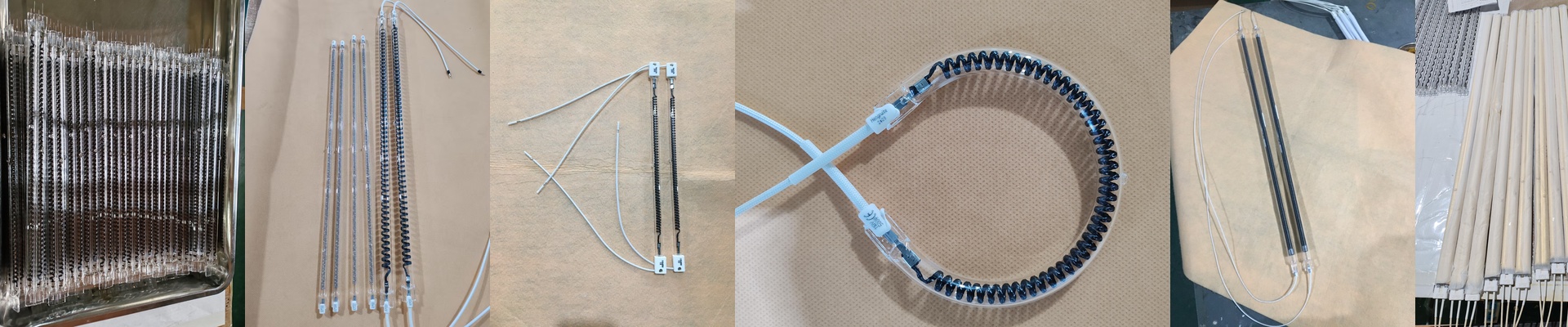
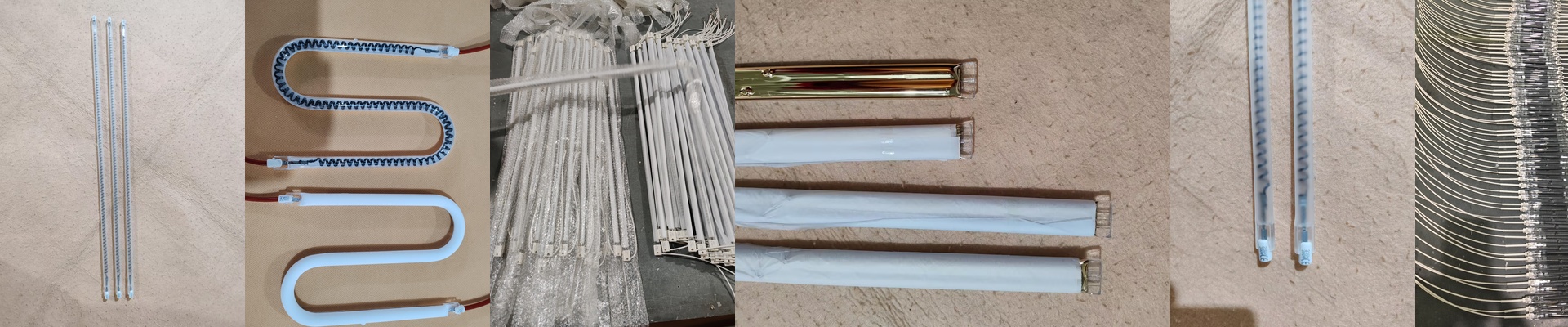
We built the Quartz Infrared Carbon Heating Lamp for one reason: laminating machines. This job isn’t about warming the whole room. It’s about hitting one spot—fast—with intense, focused heat. You need to crank the polymer film up to temperature in a blink, then hold it steady, even when you’re running at full speed.
The Power, Voltage, and Size—Plain Talk
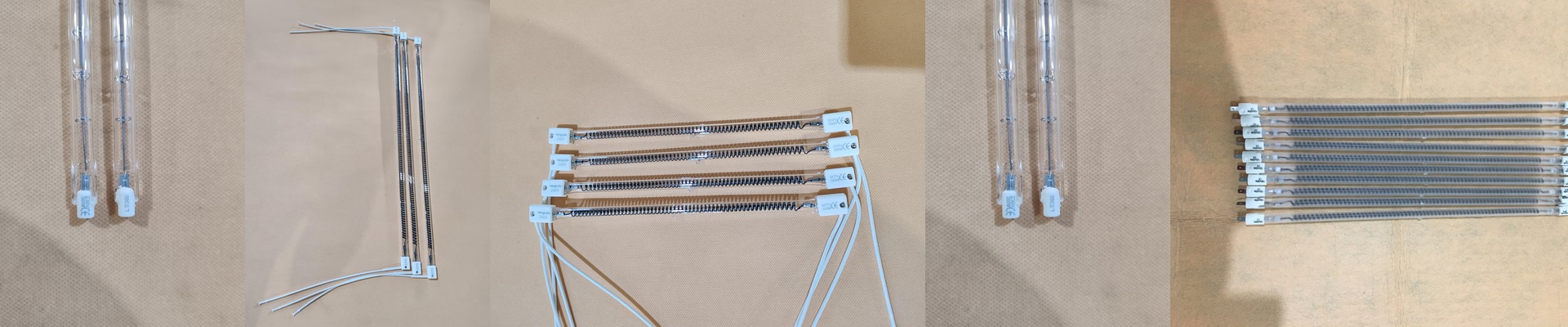
Here’s the thing: the lamp’s electrical setup is matched to what the machine actually needs. Most industrial laminators run on 400V, and that’s for a good reason. It keeps the current lower for the same wattage, so you don’t end up with a tight electrical box that’s cooking everything around it. And the 2500W rating? That’s the muscle that keeps the heat coming, even at the line speeds that would leave weaker heaters in the dust. Size matters just as much. We went with a 300mm tube because it lines up with the common hot zone widths in laminators. So you get even coverage, no wasted overhang, and no weird hot spots or cool edges. Plus, it warms up fast—like, “we’re back to setpoint after a quick changeover” fast.
Materials and Design: What’s Inside, and Why It Works
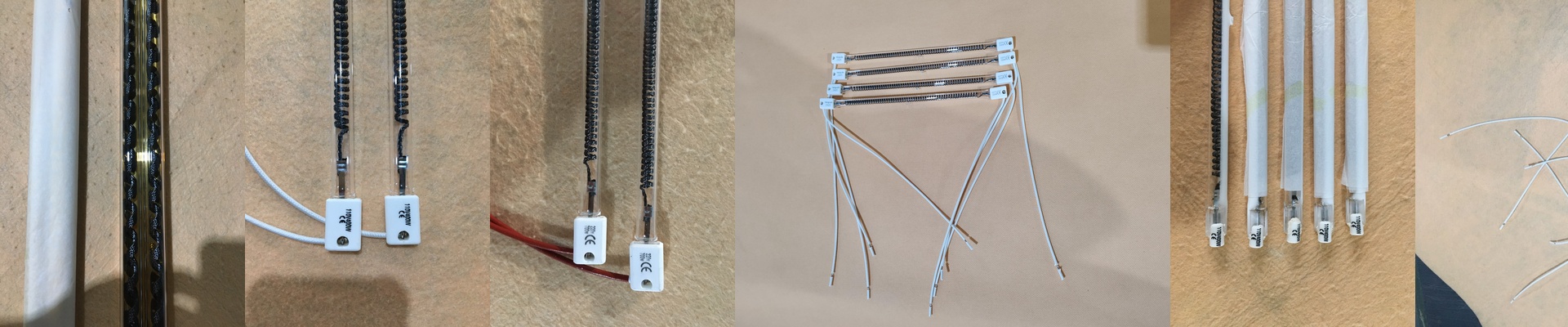
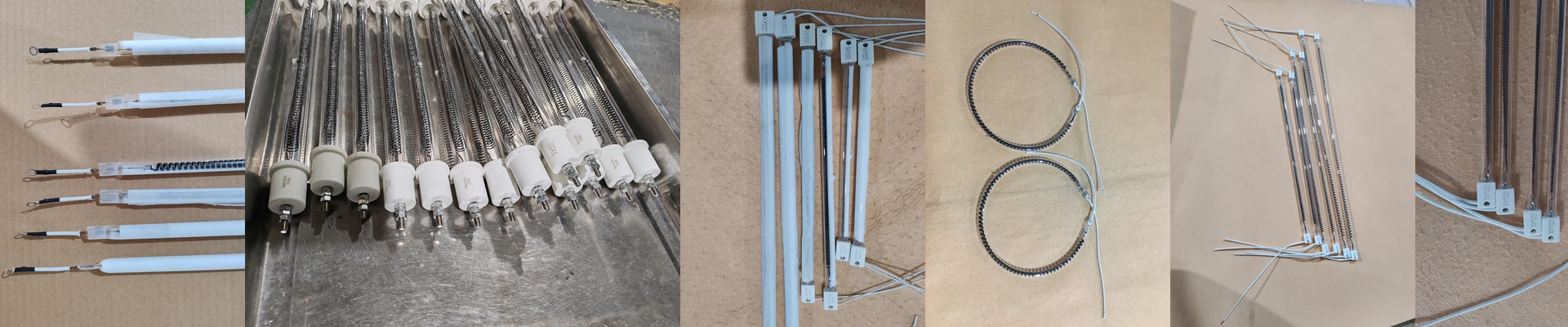
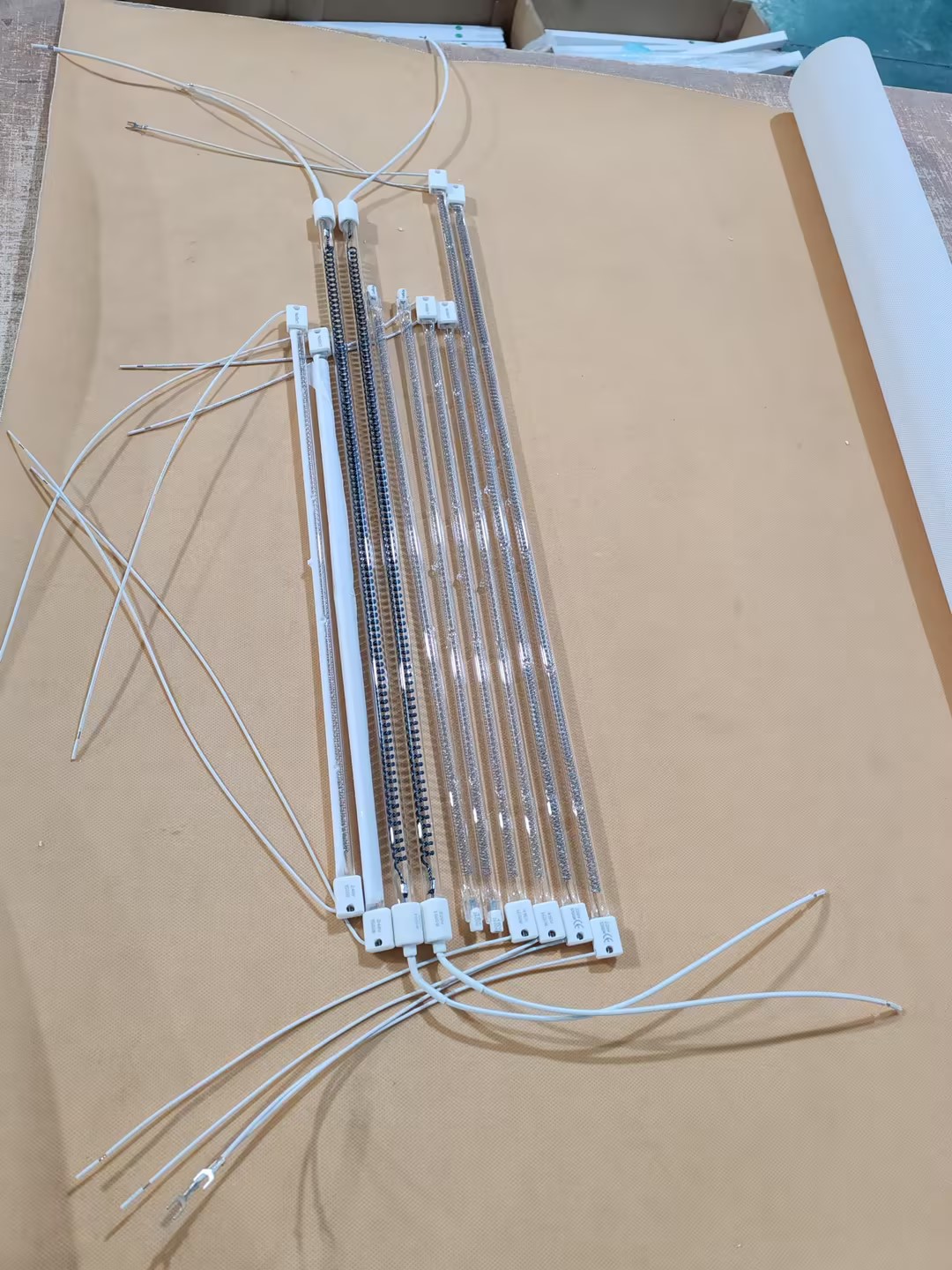
Quartz was the obvious call. It takes high heat without complaining, and it’s great at letting infrared energy through. That means more of the power goes straight into the film, not into heating the tube. The carbon filament spreads the infrared across a broad spectrum, so the heat penetrates thin films evenly. That’s how you avoid scorching the surface while the adhesive underneath hits the right flow temperature. The coating stays stable through repeated heating and cooling cycles, so the output stays consistent—shift after shift. And the connections? Practical choices for real-world machines. The R7s connector handles high current, aligns cleanly, and makes the lamp a simple drop-in replacement. If your machine uses the Sk15 interface, we’ve got that option too—no need to rewire the whole setup.
What It Feels Like on the Line
On a laminating machine, this lamp puts the heat exactly where you need it—right where film meets substrate. And it’s controllable. That translates to bond strength you can count on and fewer rejects from under-cured or uneven adhesive flow. Now, because a 400V, 2500W tube packs serious heat density, your machine’s cooling and ventilation have to be up to the task. Make sure the cabinet and nearby components stay within safe limits—plan for solid airflow and proper thermal spacing. This is a direct-fit heating element, built to take the constant heating and cooling that laminators throw at it, day after day.